
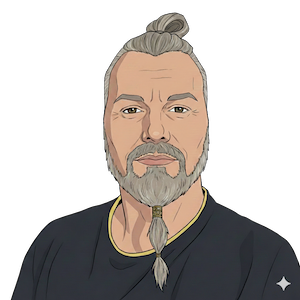
People Build Software — Built to Scale

Companies don't ship code — people do. I don't just lead — I build, hands-on or alongside your team. Your direct partner — with a partner network of trusted firms and developers when scale matters, plus an agent pipeline for delivery speed, no agency overhead.

  • Lead Guide teams of 10+ — from first prototype through years in production
  • Collaborate Build alongside your team — embedded, pragmatic, no ivory tower
  • Assemble Trusted partner firms and former developers when needed — a small network, one direct line.
  • 25+ Years Building Software
  • 10+ Peak Team Size Led
  • 8+ Years on One Codebase
  • ∞ Cups of Coffee

Your direct engineering
partner
built to last.

No fear of legacy or complex software — I take ownership and keep it moving.
You work with the engineer who ships: no account managers, no hand-offs, no agency overhead.

Nothing found for ""

It seems my digital archives are coming up empty.
Perhaps try a different keyword or clear the search.

Problems I Solve

Real situations — not a generic service catalog

These are the situations clients actually bring to — grounded in industrial software, embedded UIs, and systems that have to last. If one matches where you are, click it; your selections appear in the contact form below.

  • Legacy products that still need to ship Your customers still expect updates, fixes, and support — but you no longer want to run the software side in-house. Maybe the original team moved on, or your focus shifted to hardware, sales, or operations. I take ongoing ownership of the product: maintenance, further development, releases, and the technical depth your users still rely on — without building an engineering department around it.
  • Prototypes that have to prove something fast You need to know whether an idea works before you hire a team or commit to a platform. I build prototypes on real hardware and against real constraints — embedded web HMIs on microcontrollers, industrial touch interfaces, or cloud-connected demos wired to actual devices. The deliverable is a working answer to a concrete question: does this stack fit, does this UX work in the field, can we ship this at all?
  • Architecture and stack decisions you can trust You are about to choose a platform, split a monolith, or bet on a new technology — and the cost of getting it wrong is years, not weeks. I have built across decades of stacks, but I am not living in the past: I stay close to what is shipping today, including where AI and modern tooling genuinely help and where they do not. I tell you plainly what will work in your context, what will not, and what is worth the risk — so the architecture you commit to is solid before the first team is hired or the first sprint is burned.
  • Scaling from prototype to a real team What started as a proof of concept is now a product — and the workload is outpacing one or two developers. I help you grow the codebase and the team together: clear architecture, sensible delivery habits, and hands-on technical leadership as you move from a solo builder to five, ten, or more. The goal is scale without a rewrite, without chaos, and without losing the people who still need to understand the system.
  • Hardware and software in one flow The firmware drives the machine, the HMI serves the operator, the backend connects to the cloud — and the failures usually live in the seams. I work across microcontroller, plant-floor UI, and backend layers so the product behaves as one system. That includes protocols, firmware update paths, field error handling, and the integration work that hardware and pure-software teams often leave to each other.
  • Continuity when your team changes Key people leave. Vendors switch. Documentation is thin and the bus factor is one. I step into existing codebases — sometimes for months, often for years — take responsibility for what is already there, and keep the product moving. Whether you need a stable partner during a reorganization or someone to hold the line until a new team is ready, continuity itself is the deliverable.

My Tech Journey

Every journey starts small

It started on a Commodore — Datasette saves, RAM running out almost as fast as my ideas. From 8-bit beginnings to industrial systems in production: twenty-five years of software built to last. I don't only build greenfield; I maintain, extend, and modernize systems that have been running reliably for years.

1980–1990

The 8-Bit Era

My journey began on a VC20 — programs on Datasette, RAM gone before the ideas were. From there through C64 and Amiga to BASIC and Assembler: the 8-bit era sparked a lifelong passion for efficient problem-solving and led me to computer science studies.

VC20C64AmigaBASICAssembler
1990s

Studies & First Company

Computer science studies, then my first company — CMS and web solutions for pharmaceutical clients. Classic ASP and VBScript on the front, MS Access behind the scenes: early web systems where content and data had to stay reliable in regulated environments.

CMSASPVBScriptMS AccessPharma
2000s

The Web & .NET Desktop Era

From classic ASP toward the full Microsoft .NET stack — robust desktop applications, backend services, and SQL-backed systems. Less startup phase, more engineering at scale.

JavaScriptHTMLC#.NETWPFWCFSQL
2010

MVC Web & Microcontrollers

Software became more robust. I built dynamic web apps with ASP.NET MVC while diving deep into hardware-level programming with C++ on Arduino and Atmel platforms. The fear of bits & bytes was gone.

ASP.NET MVCjQueryC++ArduinoAtmel
2015

Web Frameworks & Connected Devices

Pioneering in Industry 4.0 and IoT using ESP systems, connecting them to the cloud with Azure IoT Hub, and adopting modern web frameworks like AngularJS.

Angular.jsIndustry 4.0IoTESPAzureIoT Hub
2020

Modern Web & Complex Industry Apps

A time where large, complex applications emerged. I developed complex industrial applications with WPF/Prism, while building modern full-stack solutions with Node.js, TypeScript, and frontend frameworks like Angular & Preact.

Node.jsTypeScriptAngularPreactTailwind CSSIoTPrismWPFOPC-UA
Now

AI, Agents & Engineering Judgment

I use AI and agent-assisted workflows where they reduce toil — code review, test generation, documentation archaeology — not where they replace engineering judgment. The stack changes; the question stays the same: will this still work in five years, and can the next team understand it? That is the same focus as always — robust systems, maintainable code, and the agent pipeline when it genuinely speeds delivery without cutting corners.

AIAgent WorkflowsMastraMaintainabilityEngineering Judgment

What's next on your roadmap? Whether you're starting fresh, scaling what you have, or extending a system already in production — I'm in for the long run. Let's talk

My Selected Work (Anonymized)

From microcontroller to plant-floor HMI

I build greenfield and take over what already runs — either way, my projects tend to stay in production for years, not months. From resource-constrained embedded UIs to large industrial systems: challenges and outcomes below are genuine.

<100KB UI footprint

Embedded Web HMI

A polished web operator interface on an STM32 without a filesystem — Mongoose, Preact, firmware updates, user management. One reusable architecture; new device interfaces now ship in ~80% less time.

STM32PreactTailwind CSSDevContainer
750k+ LOC

Industrial UI

A small prototype grew into a large industrial application — OPC-UA, complex user rights, daily use on the plant floor. I was architect from the start and later led a team of ten developers. Still in active development — no rewrite.

.NET 4.7.2WPFPRISMOPC-UAWCFCharting
8+ years live

Industrial Touch HMI

A production touchscreen on industrial hardware — Angular, Node.js, Python, designers in the loop. Eight years and five major redesigns; I kept full-stack ownership from USB updates to Azure IoT streaming. Still running in the field.

AngularNode.jsExpressPythonPostgreSQLAzure IoT HubBootstrap

I keep this section short on purpose. Names and screenshots stay off the site; trust builds in conversation and over time — not from a long portfolio list. If we talk, I can share what makes sense under mutual discretion.

Where to Find Me

Remote first — overlap when it counts

Lieksa, eastern Finland — EET/EEST. Remote by default; on-site in Finland or nearby Nordics when it matters.

Urheilukatu 18 A 5 81700 Lieksa, Finland
  • Remote Overlap with Central Europe is straightforward; US East Coast mornings work well too.
  • Focus Quiet base in eastern Finland for architecture sessions, legacy code, and long debugging runs.
  • Languages English day-to-day; German too. Clients in DACH, the Nordics, and beyond.

Lieksa

Your local time vs. mine — handy when planning calls.

Contact

No sales team, no ticket queue — you reach the person who would do the work. Click problems, technologies, or project tags anywhere on the page; they show up in the form below. B2B only.

What happens next

  1. You send this form — add topics if you like, no pitch deck required.
  2. I reply personally, usually within a couple of business days.
  3. We have a short call to see if there's a fit. Straightforward, no sales funnel.
Click a problem, technology, or project tag on the page to add it here.
0